Scientific Machine Learning Research Bootcamp
Work on impactful SciML research projects. Present at top-tier venues. Convert projects into publications. Build physics-grounded ML models using Julia and the SciML ecosystem.
Instructors from
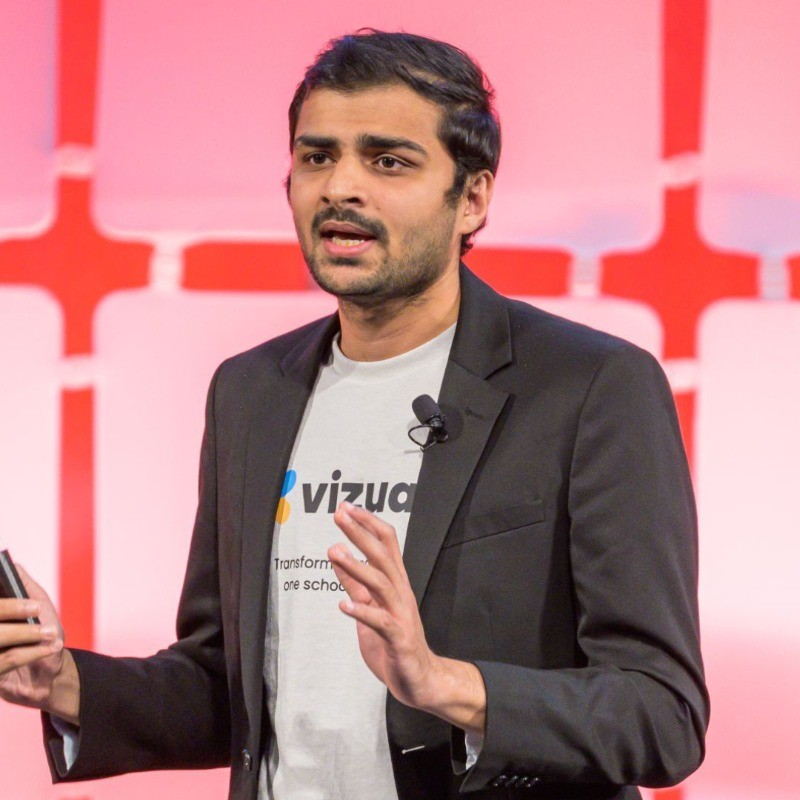
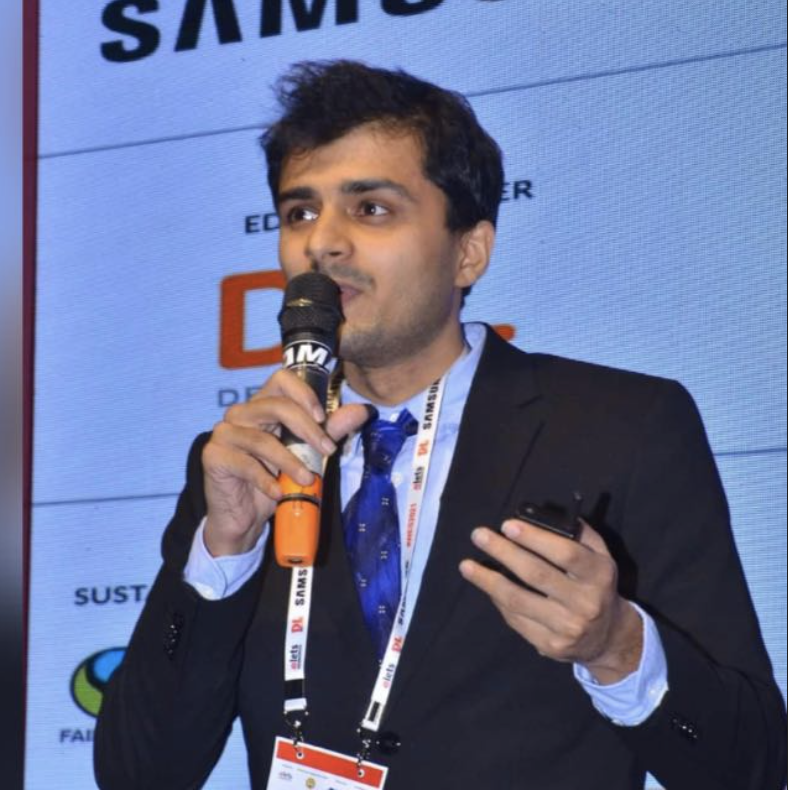
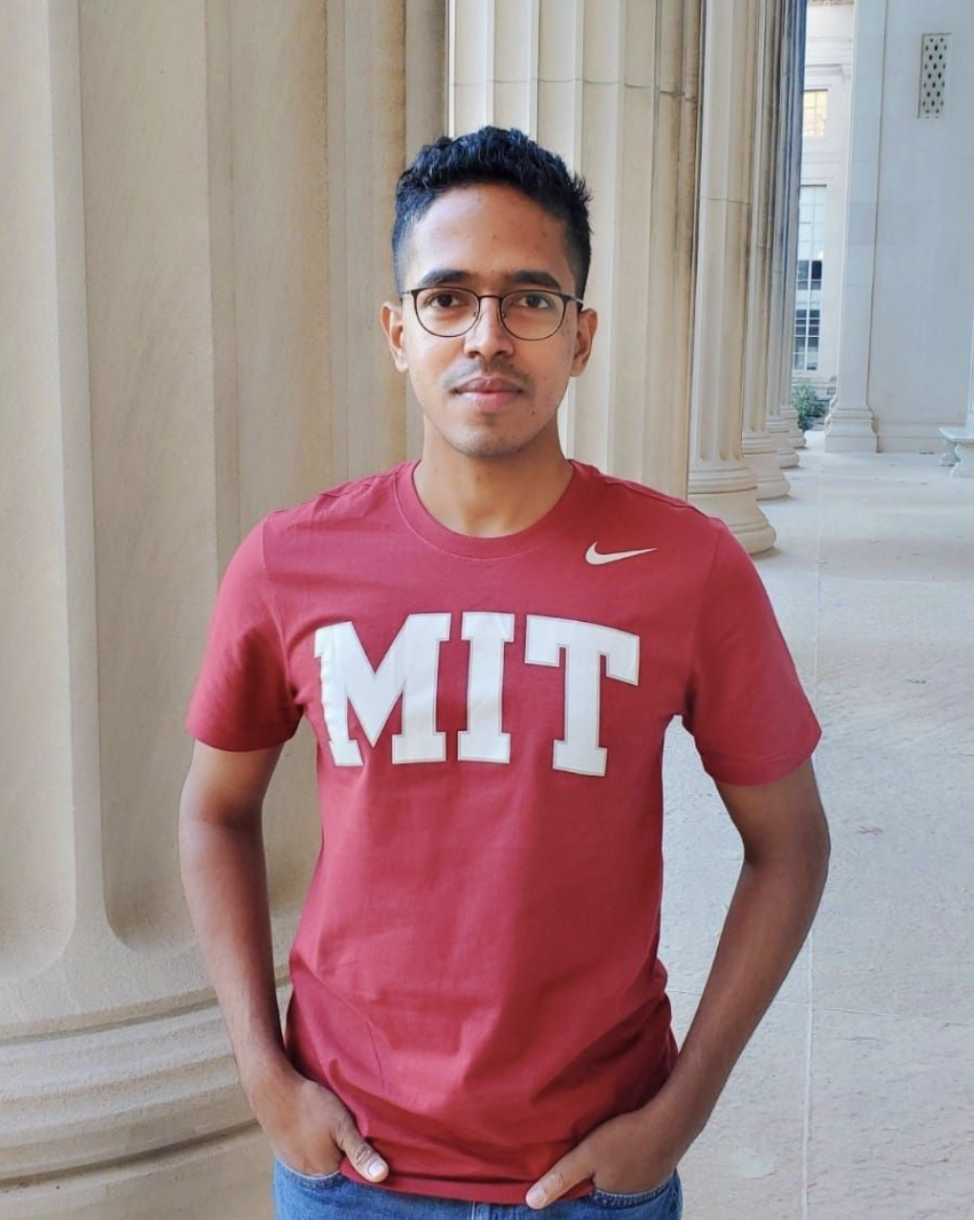
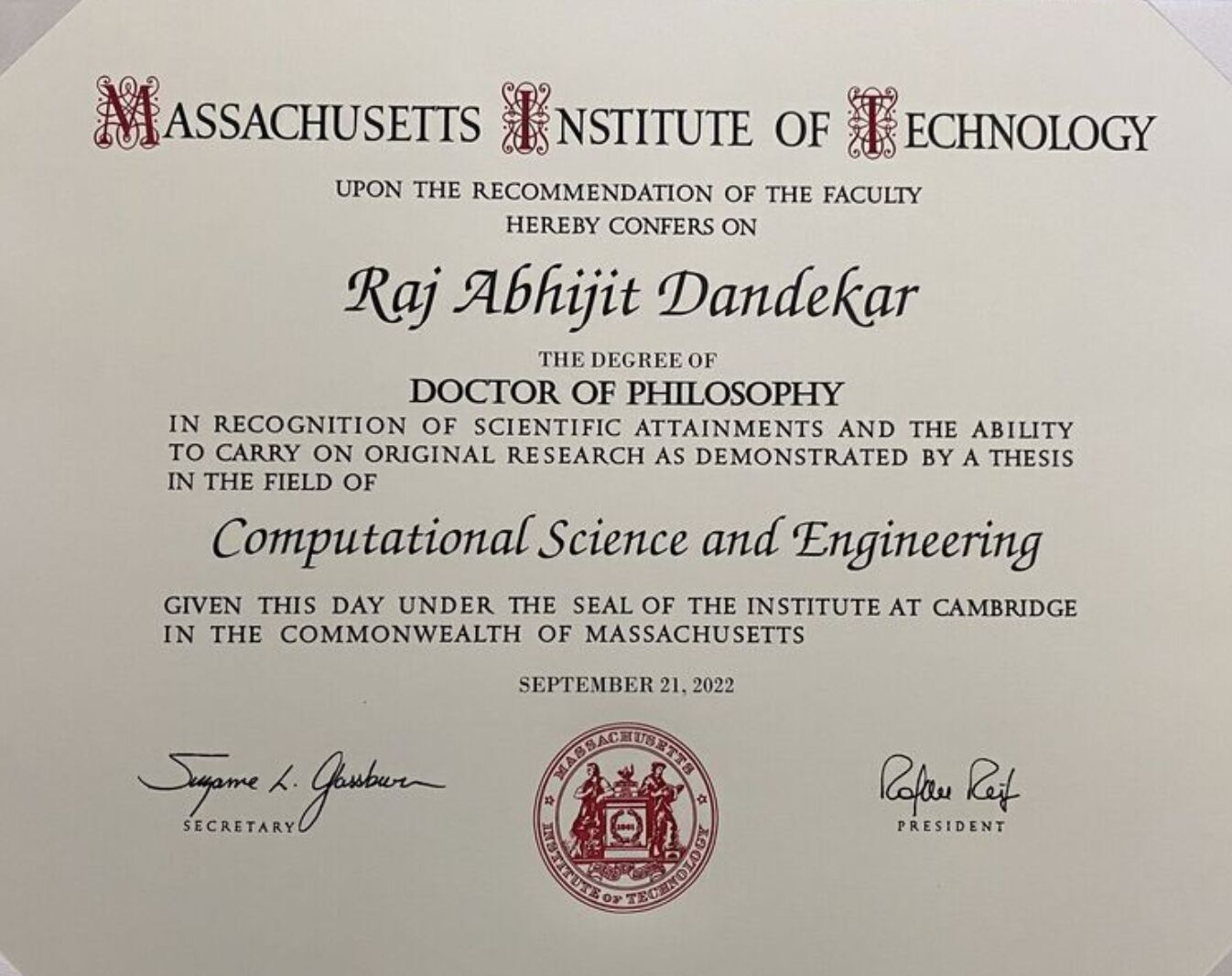
Hear From Dr. Raj Dandekar(MIT PhD)
What You Can Do with SciML
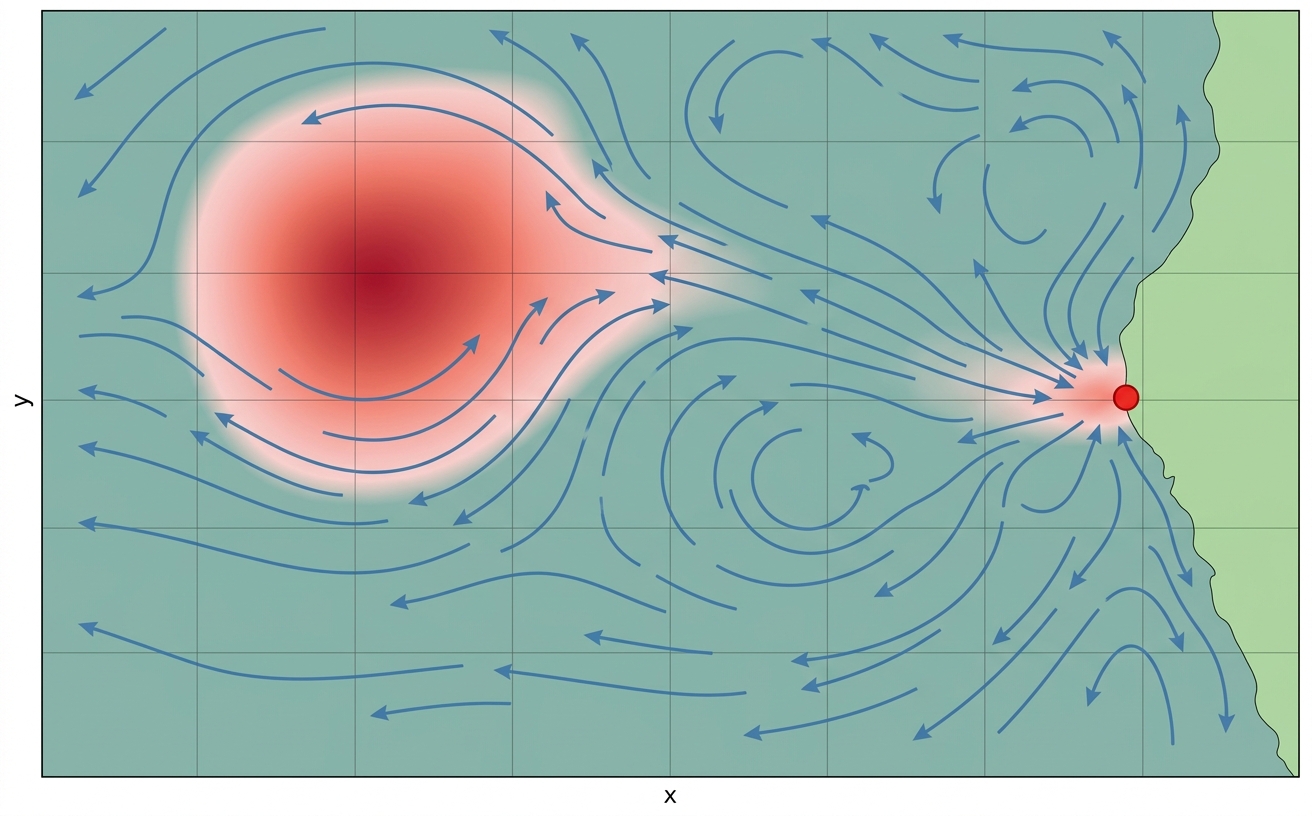
From modeling pandemics to discovering equations, SciML enables research-grade applications across every scientific domain.

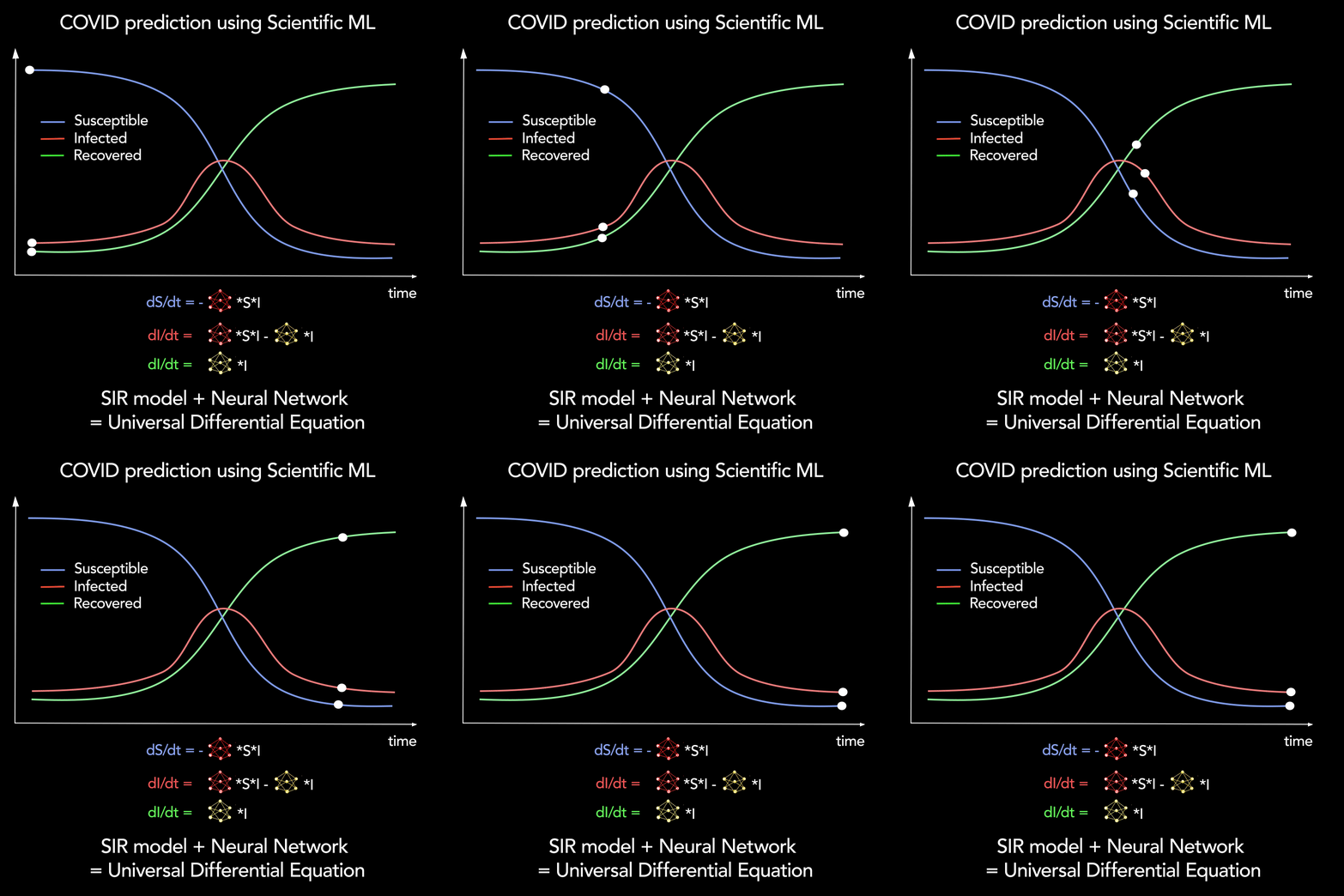
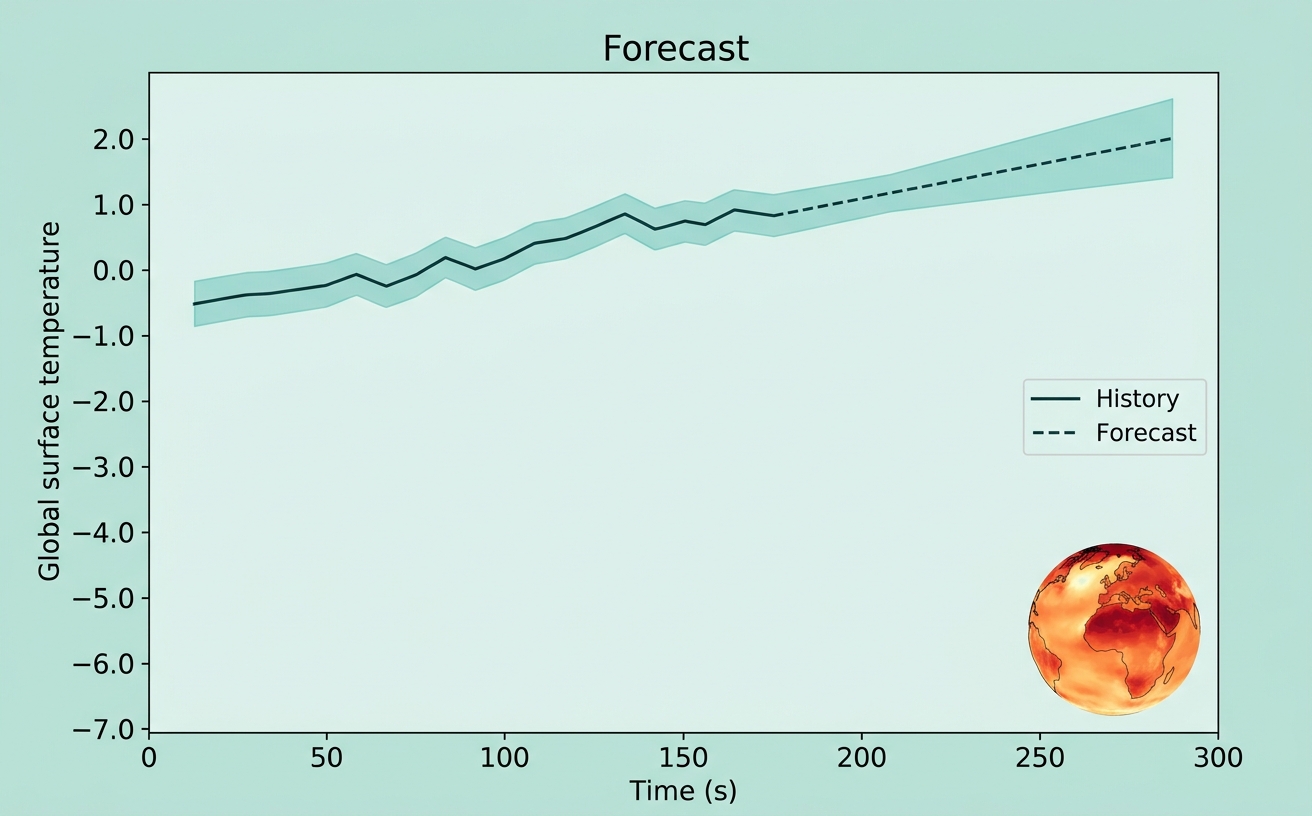
COVID-19 Forecasting with SciML

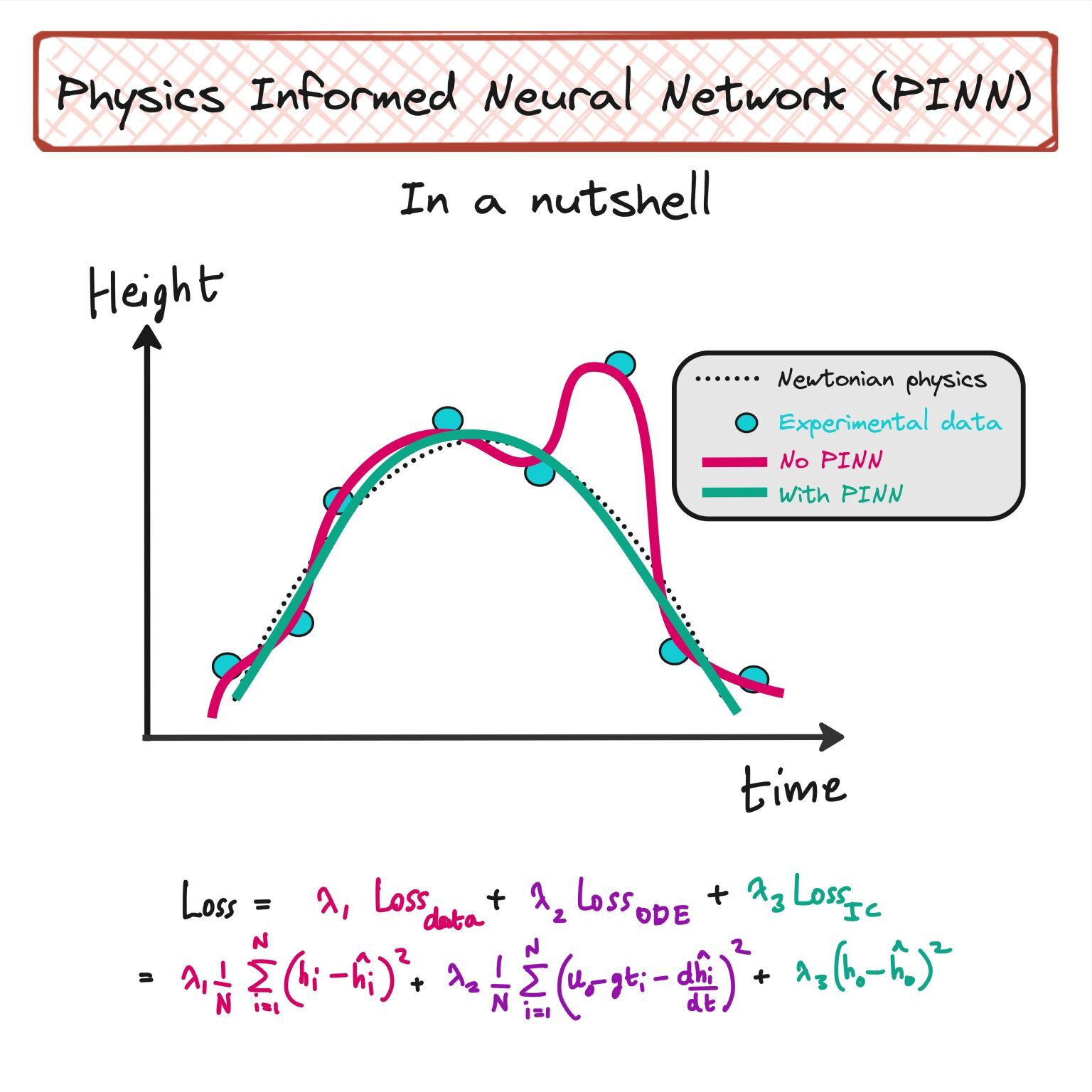
Physics Informed Neural Network

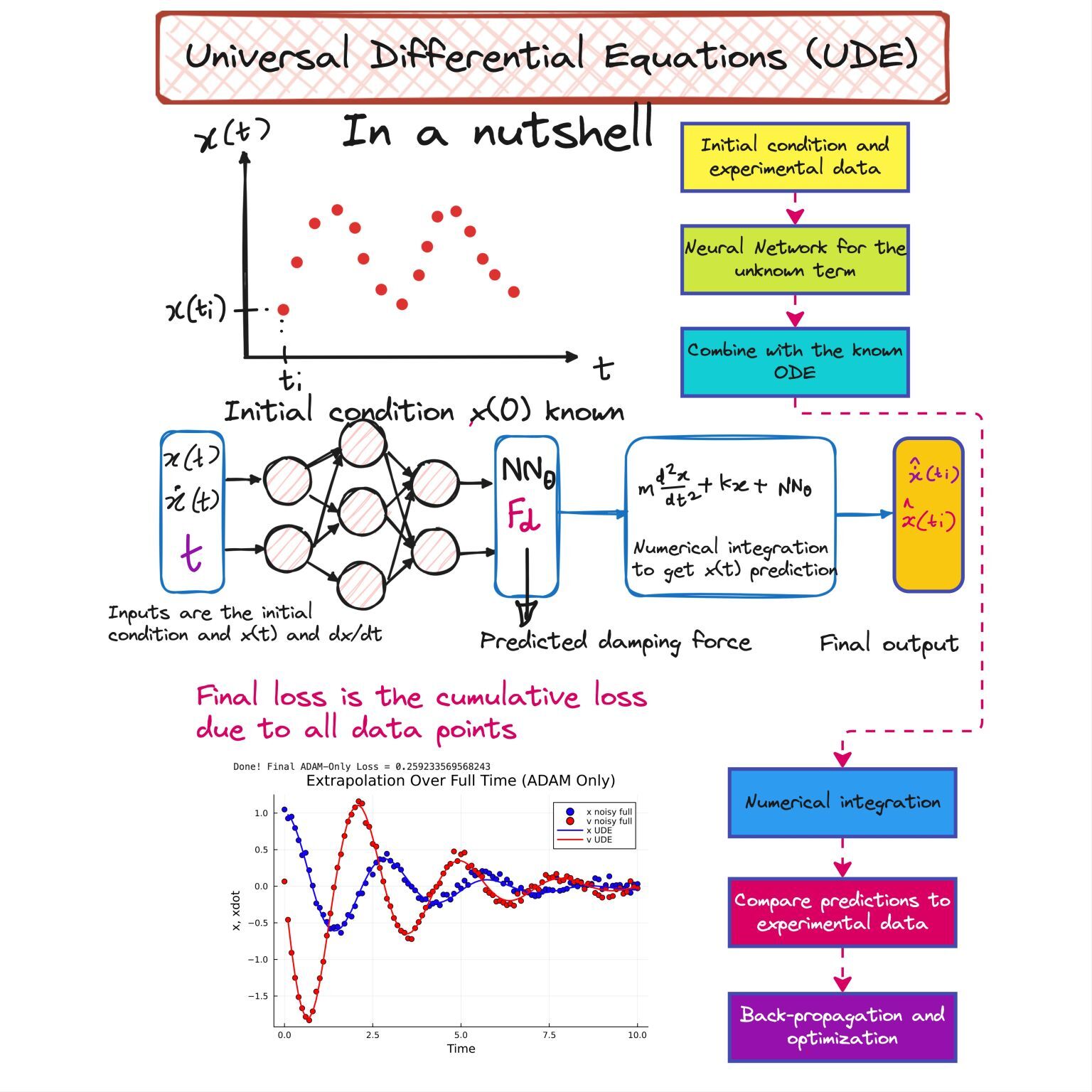
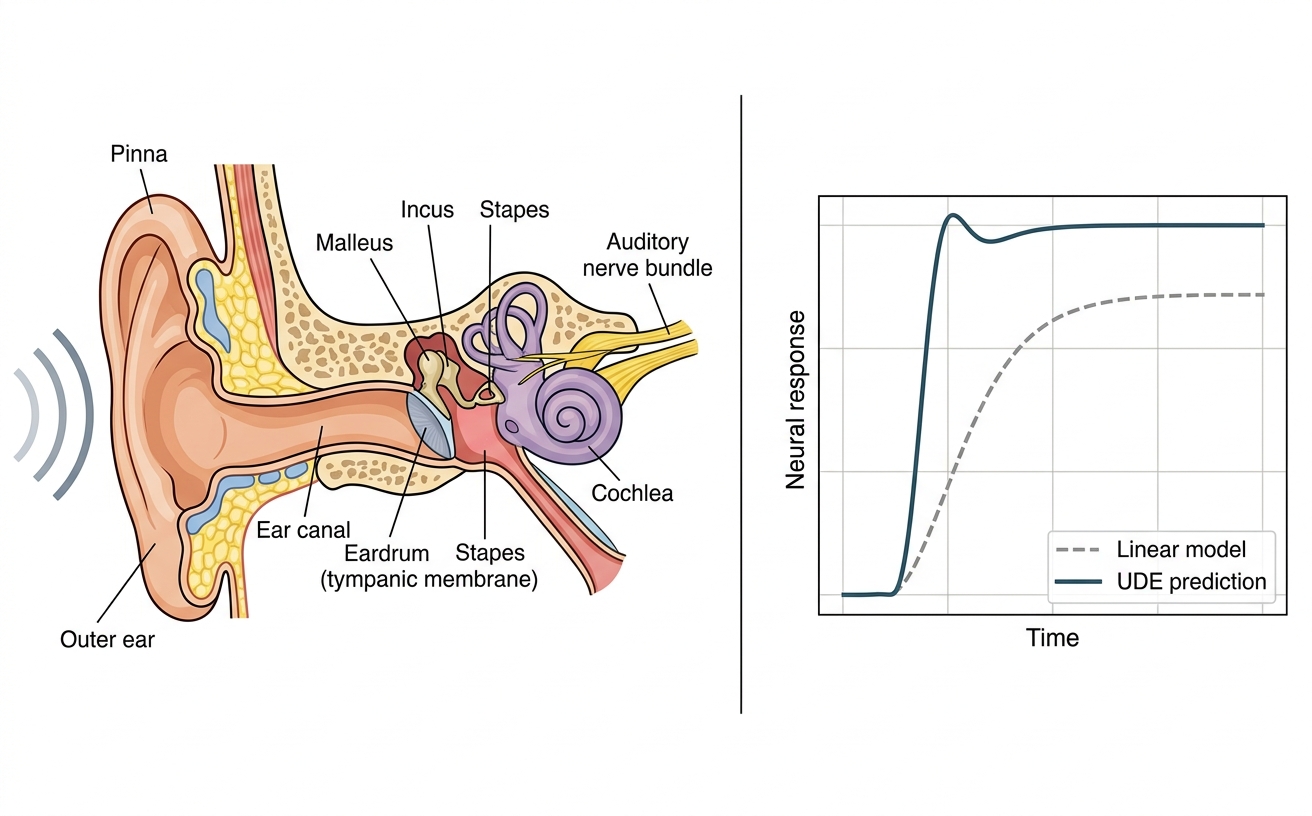
Universal Differential Equations

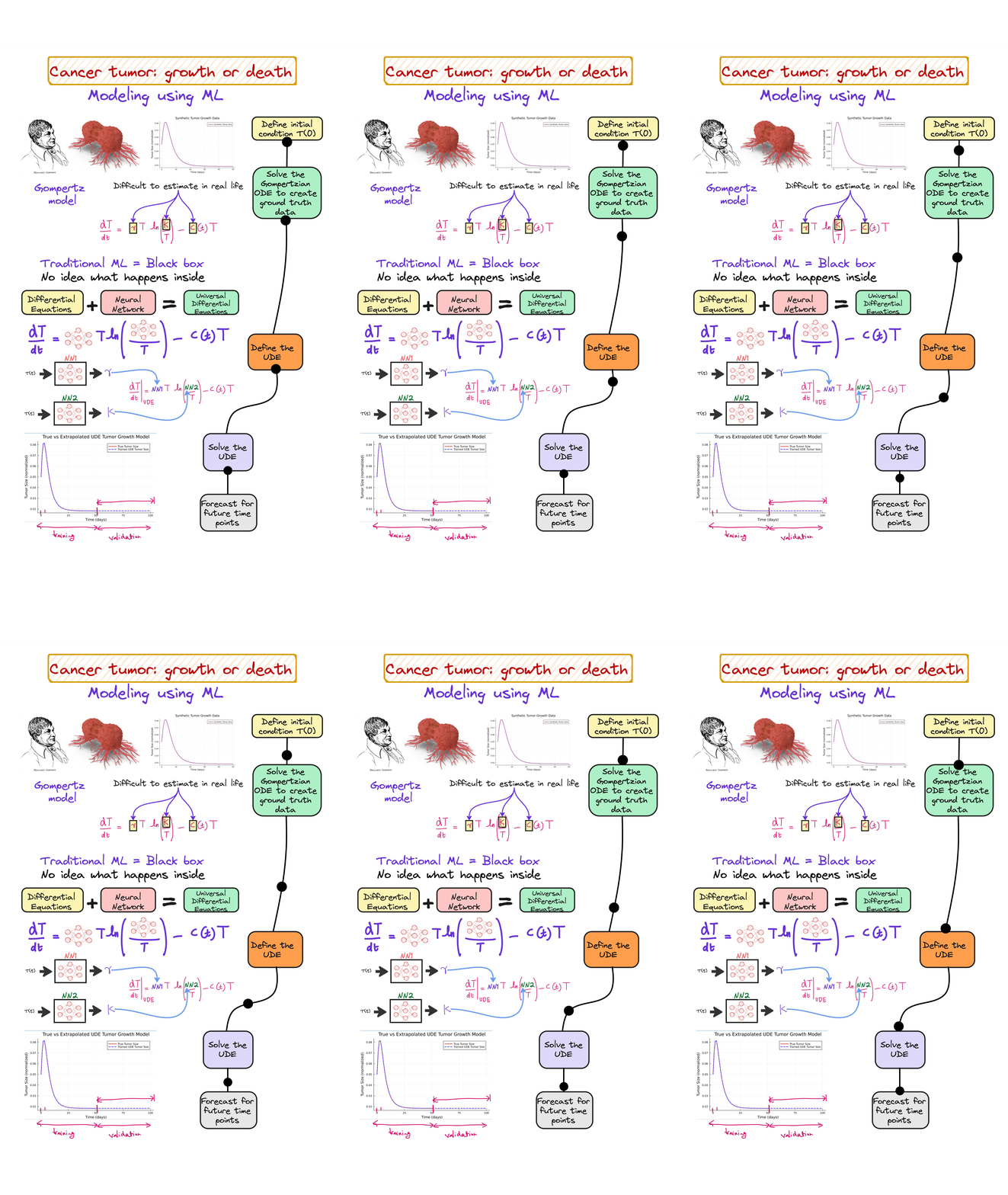
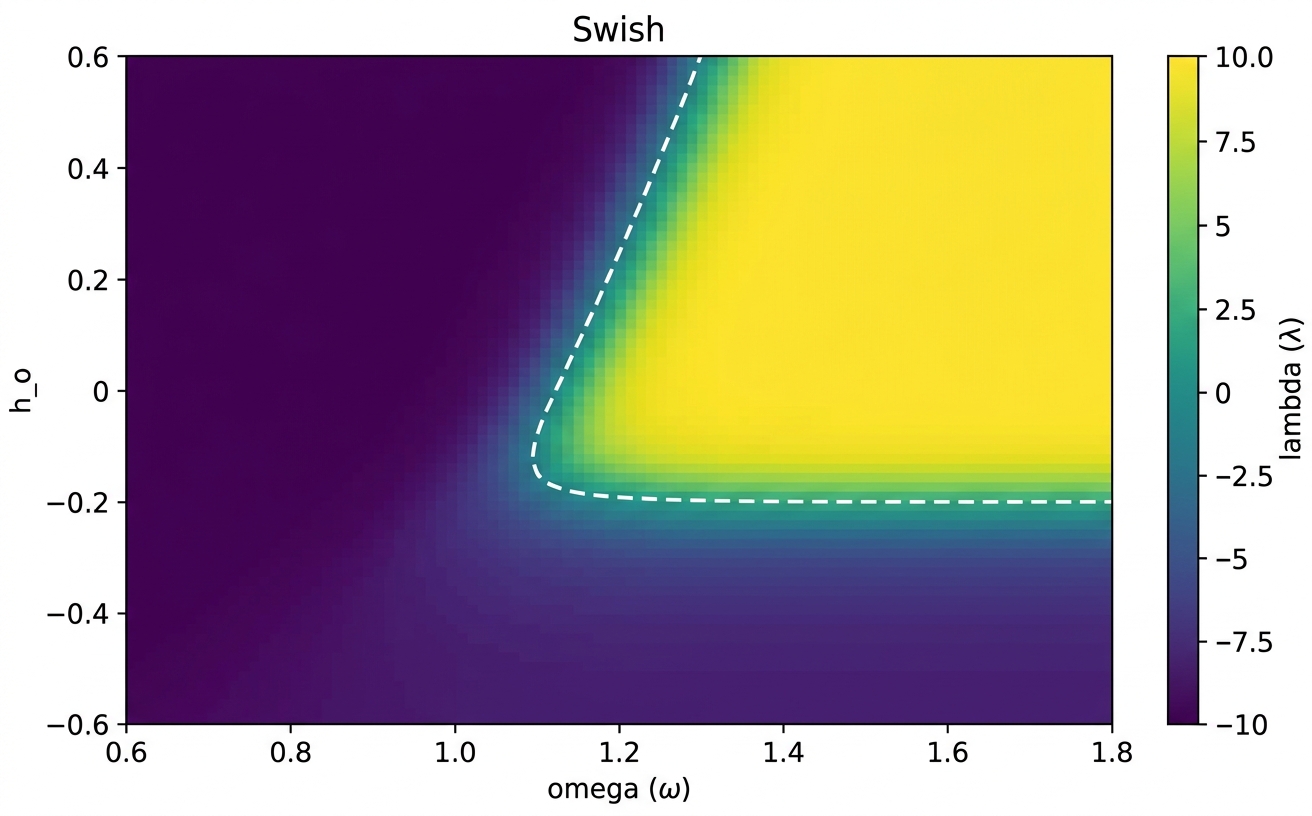
Cancer Tumor: Growth or Death

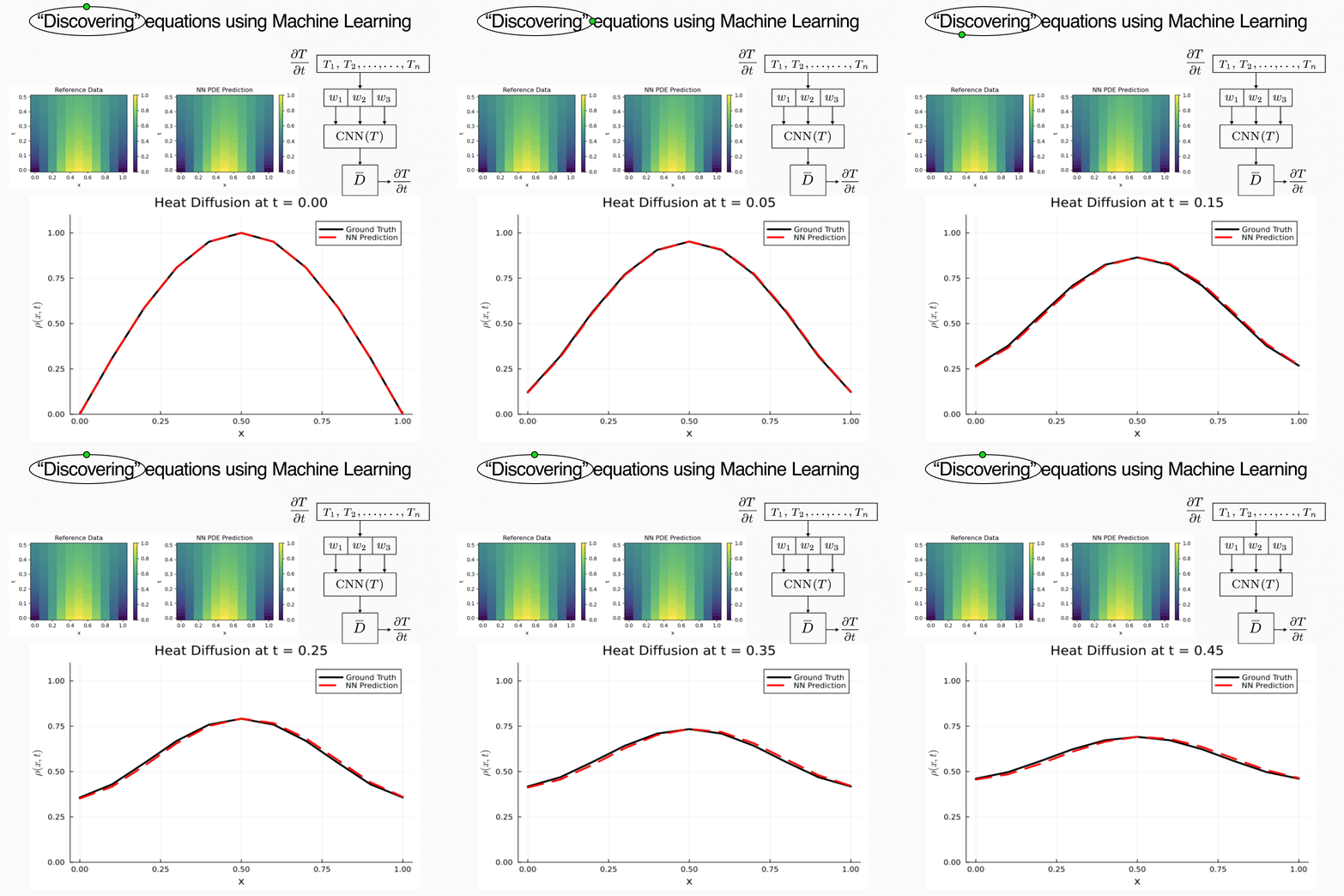
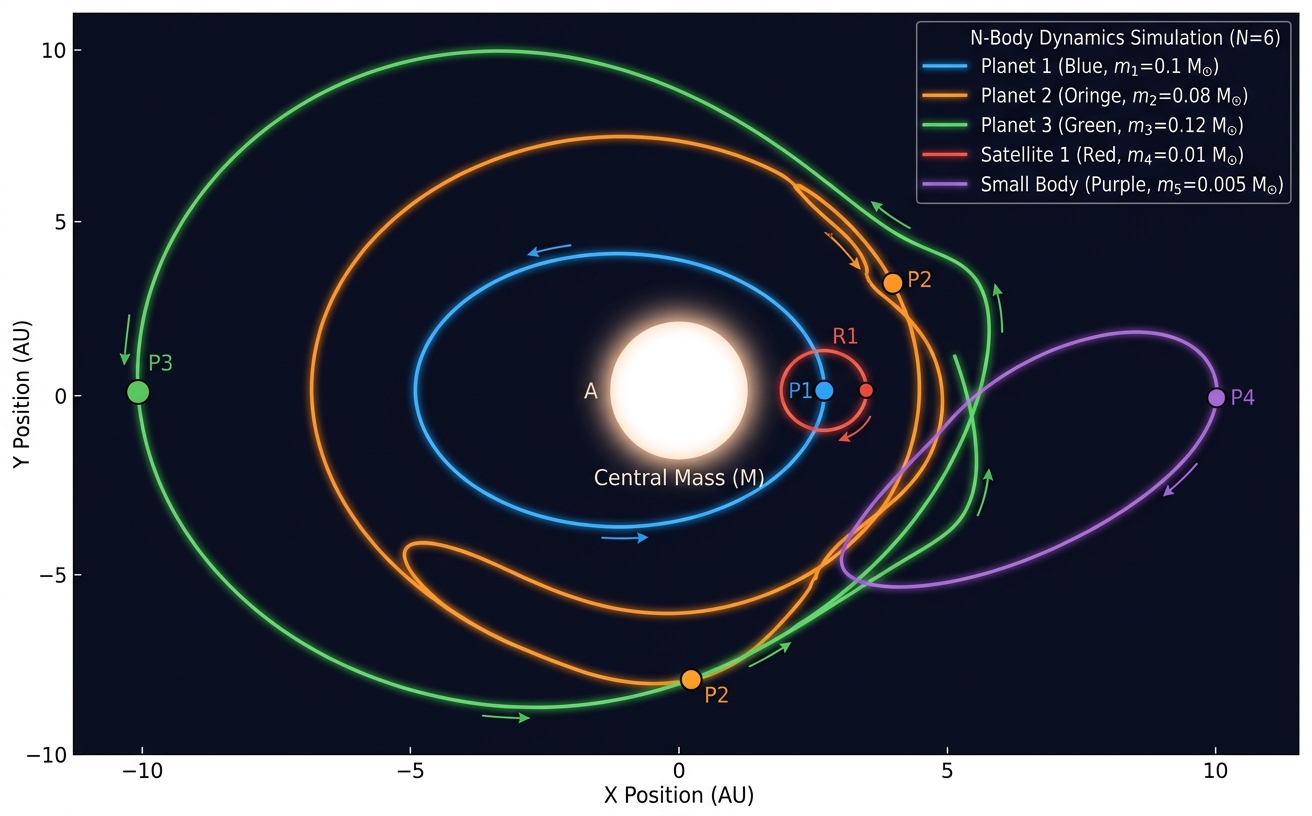
Discovering Equations Using ML
The Pillars of Scientific Machine Learning
We teach three interconnected frameworks that form the foundation of modern Scientific ML. Each represents a different way to combine physics with neural networks, from embedding constraints in loss functions to replacing unknowns in differential equations.
Scientific Machine Learning
The overarching paradigm that integrates domain knowledge with data-driven learning. SciML models achieve great forecasting with just 20% of the data traditional ML requires, because they leverage structural knowledge from physics, biology, and engineering.
Physics-Informed Neural Networks
PINNs embed differential equations, conservation laws, and boundary conditions directly into the neural network's loss function. The network learns to satisfy both the data and the governing physics simultaneously, producing solutions that are physically consistent by construction.
Neural ODEs and Universal Differential Equations
Neural ODEs replace ODE right-hand sides with neural networks for fully data-driven dynamics. UDEs go further: they keep known physics terms intact while using neural networks only for unknown components, enabling symbolic recovery of closed-form equations.
Julia + SciML Ecosystem
Julia's composable ecosystem (DifferentialEquations.jl, Lux.jl, Optimization.jl) integrates ODE solvers and neural networks seamlessly. Julia is as fast as C, as readable as Python, and has native support for automatic differentiation.
Interpretable and Symbolic Recovery
Unlike black-box ML, SciML produces models grounded in physical laws. After training, use symbolic regression to recover closed-form equations from neural networks, achieving full interpretability of learned dynamics.
Cross-Domain Applications
Apply these frameworks to computational physics, ecology, economics, health, fluid dynamics, climate science, and more. Any domain with partially known governing equations benefits from this hybrid approach.
How Scientific ML Works
Publication-quality diagrams illustrating the core frameworks you will master in this bootcamp.
The SciML Landscape
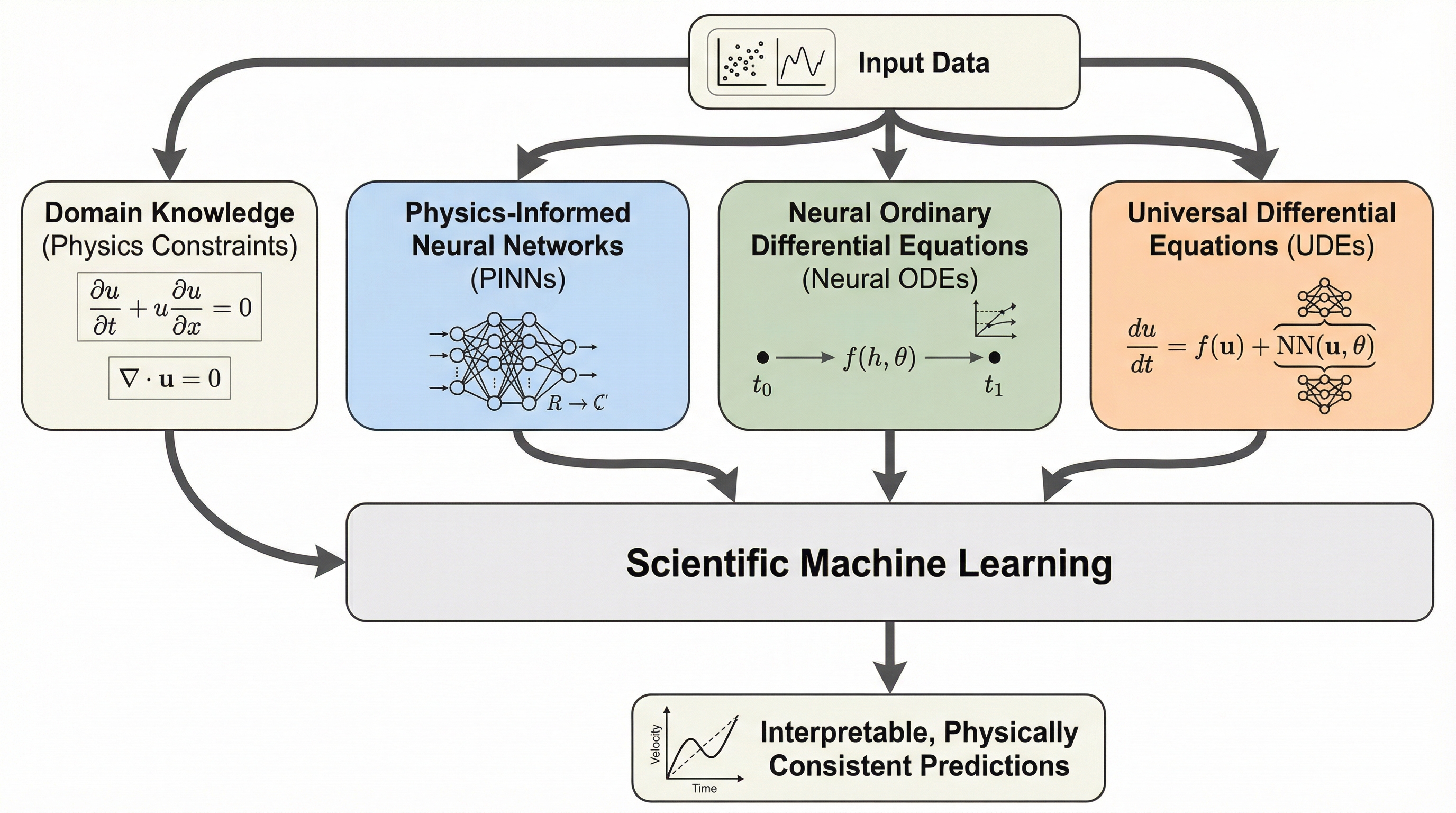
Input data flows through three complementary frameworks: Physics-Informed Neural Networks embed constraints in loss functions, Neural ODEs learn continuous dynamics, and Universal Differential Equations combine known physics with neural networks for unknown terms.

Universal Differential Equations
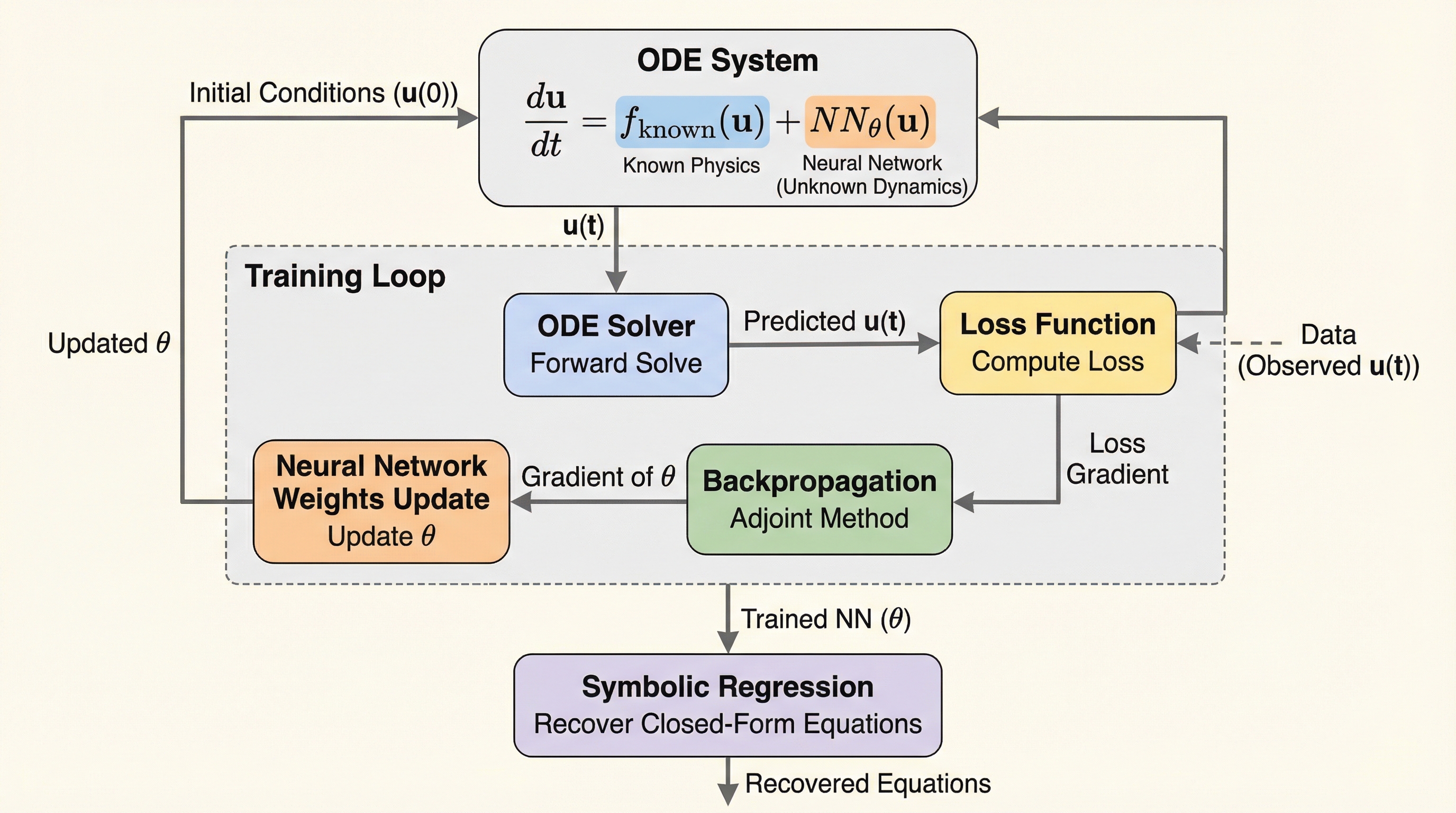
The UDE training pipeline: known physics is preserved while neural networks approximate unknown dynamics. The ODE solver produces predictions, the loss function compares against data, adjoint methods compute gradients, and symbolic regression recovers closed-form equations.

Physics-Informed Neural Network Training
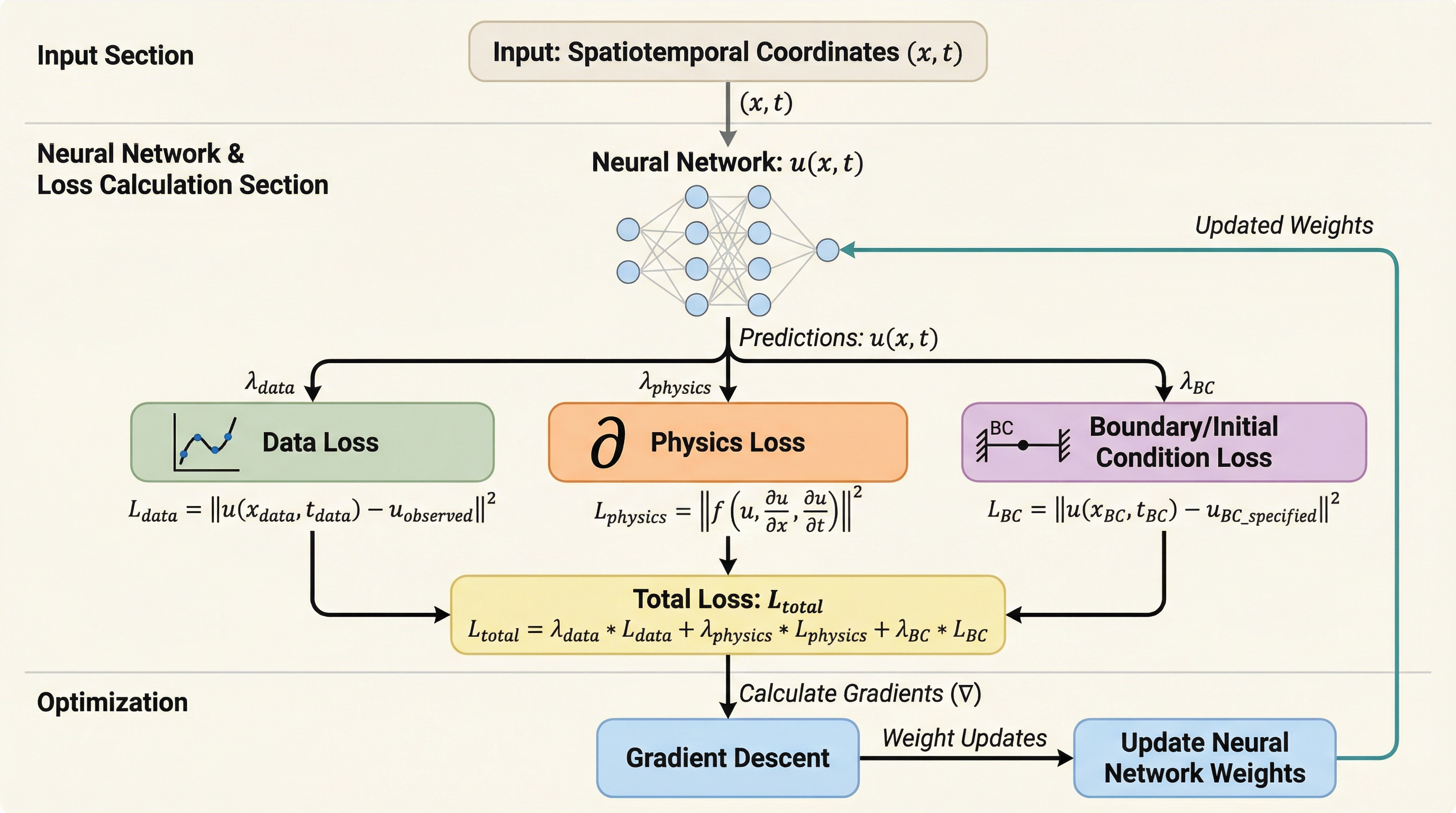
A neural network takes spatiotemporal coordinates as input and outputs the solution. Three weighted loss terms enforce data fidelity, PDE residuals, and boundary/initial conditions, ensuring physically consistent predictions.

Designed for Researchers, Engineers, and Scientists
Whether you come from physics, engineering, economics, or biology, this bootcamp teaches you to integrate machine learning with your existing domain expertise.
Graduate Researchers
PhD students and postdocs who want to apply ML to their domain (physics, biology, chemistry, ecology) while preserving theoretical rigor.
Engineers
Mechanical, chemical, civil, and aerospace engineers looking to augment traditional simulation methods with data-driven hybrid approaches.
Data Scientists
ML practitioners who want to move beyond black-box models and build physics-constrained systems that generalize better with less data.
Domain Experts
Economists, biologists, climate scientists, and other domain specialists looking to incorporate ML into their mathematical models.
A Guided Journey from Foundations to Research
15 topics spanning Julia programming, ODE/PDE modeling, PINNs, Neural ODEs, UDEs, and hands-on research projects aimed at publication.
Intro and Transition to ML
Led by Dr. Raj Dandekar
- Introduction to the course
- How traditional ML is taught
- How SciML offers a better path for domain experts
SciML Technical Overview
Led by Dr. Raj Dandekar
- Introduction to Scientific Machine Learning
- Basics of SciML and core concepts
- Problems which can be solved using SciML
- How you can transition to ML from any field
The Julia Programming Language
Led by Dr. Sreedath Panat
- What is Julia and why it is the coolest new language
- Installing and setting up Julia
- Julia fundamentals for scientific computing
- The SciML ecosystem overview
Running ODEs in Julia
Led by Dr. Raj Dandekar
- What are ODEs and PDEs?
- Differential equations in Julia with DifferentialEquations.jl
- Building your first ODE in Julia using hands-on examples
- Numerical solvers and sensitivity analysis
Running PDEs in Julia
Led by Dr. Sreedath Panat
- Introduction to partial differential equations
- Building your first PDE in Julia using hands-on examples
- Numerical discretization methods
- Boundary and initial conditions
Neural Networks, Gradient Descent, and Backpropagation
Led by Dr. Rajat Dandekar
- What are weights, biases, and activation functions?
- What is gradient descent optimization?
- How are weights of neural networks optimized?
- Building neural networks in Julia with Lux.jl
PINNs: Theory
Led by Dr. Raj Dandekar
- What are Physics-Informed Neural Networks (PINNs)?
- The PINN framework: embedding physics in the loss function
- Data loss, physics loss, and boundary condition loss terms
- Weighted loss balancing strategies
PINNs: Practical
Led by Dr. Raj Dandekar
- Building your first PINN in Julia
- Applications of PINNs to real-world problems
- Solving forward and inverse problems with PINNs
- Debugging and optimizing PINN training
Neural ODEs: Theory
Led by Dr. Rajat Dandekar
- The 3 Pillars of Scientific Machine Learning
- What are Neural ODEs?
- Adjoint sensitivity methods for efficient backpropagation
- Comparison with discrete residual networks
Neural ODEs: Practical
Led by Dr. Rajat Dandekar
- Building your first Neural ODE in Julia
- Applications of Neural ODEs
- Implementing a Neural ODE model end-to-end
- Training on time-series data
UDEs: Theory
Led by Dr. Raj Dandekar
- What are Universal Differential Equations (UDEs)?
- Known physics + neural network for unknown terms
- Training strategies: Adam + LBFGS two-phase optimization
- Symbolic regression to recover closed-form equations
UDEs: Practical
Led by Dr. Raj Dandekar
- Building your first UDE in Julia
- Applications of UDEs across domains
- Recovering symbolic equations from trained neural networks
- End-to-end UDE pipeline
Research Project: COVID-19 Forecasting with SciML
Led by Dr. Raj Dandekar
- SIR/SEIR compartmental models for disease spread
- Applying UDEs to learn unknown transmission dynamics
- Incorporating real-world COVID-19 data
- Converting project results into a research publication
Research Project: Black Hole Dynamics
Led by Dr. Rajat Dandekar
- Discovering equations using ML
- Geodesic equations in general relativity
- SciML for astrophysics: combining known spacetime geometry with learned corrections
- Scientific visualization and publication-ready figures
Research Project: Cancer Tumor Modeling
Led by Dr. Sreedath Panat
- Modeling tumor growth and treatment response with SciML
- Physics-informed approaches to biological systems
- UDEs for partially known biological dynamics
- Preparing results for publication in top-tier venues
Research-Grade Deliverables
Everything you need to go from SciML beginner to publishing research-quality results in your domain.
Complete Julia Codebase
Production-ready Julia code for every session, including PINNs, Neural ODEs, UDEs, and research projects.
- All lecture code files and notebooks
- Homework assignments with solutions
- Research project starter templates
- Fully documented SciML pipelines
Lecture Notes and Videos
Lifetime access to all session recordings and comprehensive lecture notes covering every SciML concept.
- HD video recordings of all sessions
- Detailed lecture notes in PDF format
- Annotated code walkthroughs
- Reference material and reading lists
Research Project Portfolio
Two complete research projects (COVID-19 modeling and black hole dynamics) ready for your portfolio or publication.
- COVID-19 epidemic modeling with UDEs
- Black hole dynamics visualization
- Reproducible research notebooks
- Publication-ready figures and results
Community and Mentorship
Join the Vizuara SciML community on Discord for ongoing collaboration, doubt clearance, and research partnerships.
- Discord community access
- Student collaboration opportunities
- Assignment checking and doubt clearance
- Free access to all ML webinars
Learn from MIT and Purdue AI PhDs
Our instructors are co-founders of Vizuara AI Labs and published researchers in Scientific Machine Learning, with expertise spanning physics-informed methods, neural differential equations, and applied ML.

Dr. Raj Dandekar
Co-founder, Vizuara AI Labs
PhD from MIT, B.Tech from IIT Madras. Dr. Raj specializes in building LLMs from scratch, including DeepSeek-style architectures. His expertise spans AI agents, scientific machine learning, and end-to-end model development.

Dr. Rajat Dandekar
Co-founder, Vizuara AI Labs
PhD from Purdue University, B.Tech and M.Tech from IIT Madras. Dr. Rajat brings deep expertise in reinforcement learning and reasoning models, focusing on advanced AI techniques for real-world applications.

Dr. Sreedath Panat
Co-founder, Vizuara AI Labs
PhD from MIT, B.Tech from IIT Madras. 10+ years of research experience. Dr. Panat brings deep technical expertise from both academia and industry to make complex AI concepts accessible and practical.

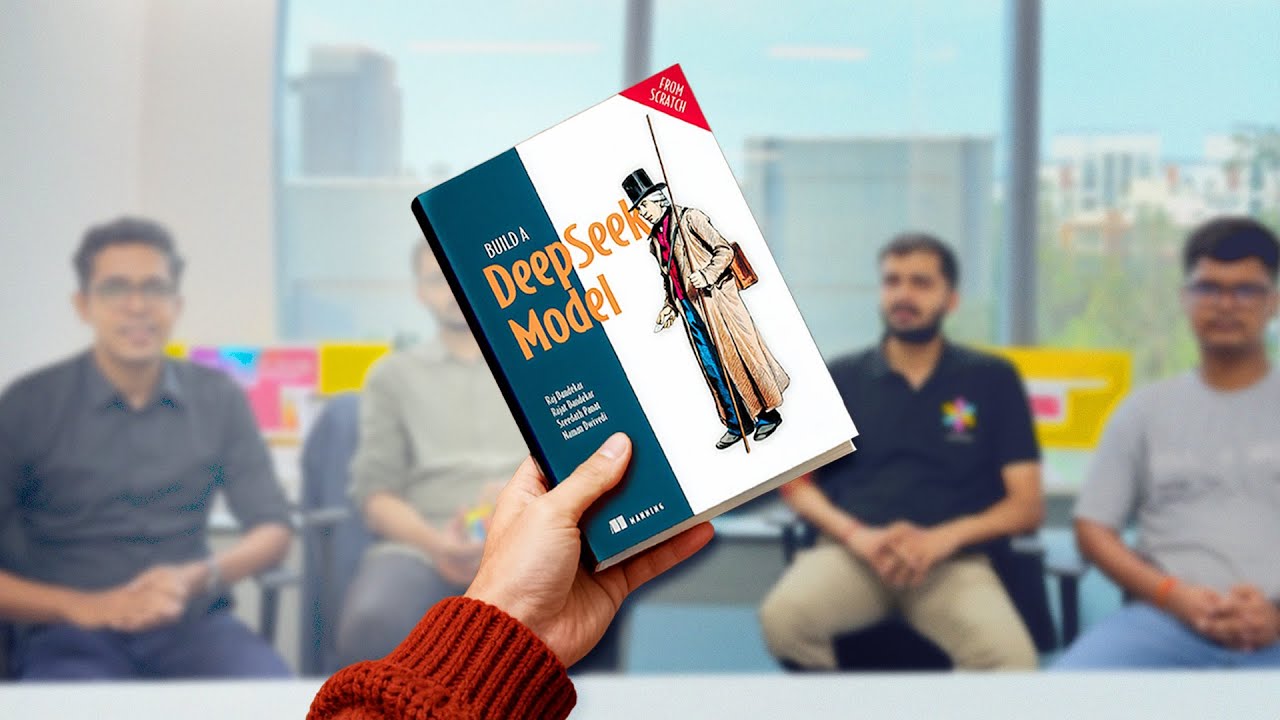
Manning #1 Best-Seller
Build a DeepSeek Model (From Scratch)
By Dr. Raj Dandekar, Dr. Rajat Dandekar, Dr. Sreedath Panat & Naman Dwivedi
Learn from MIT PhD Researchers
Our lead instructor Dr. Raj Dandekar holds a PhD from MIT, where he conducted research at the Julia Lab under Prof. Alan Edelman and Chris Rackauckas, the creators of the SciML ecosystem.

Sample Papers From Our Research
A selected few SciML papers from our research over the past years. Students in the Researcher and Industry Professional plans work on similar projects aimed at publication.
Enroll in the Bootcamp
Choose the plan that matches your goals, from self-paced learning to intensive research mentorship with MIT PhDs.
Student Plan
Save 43%. Originally Rs 30,000.
- Lifetime access to all videos, code files, and homework assignments
Community Plan
Save 38%. Originally Rs 60,000.
- Lifetime access to all videos, code files, and homework assignments
- Access to bootcamp community on Discord
- Student collaborations on Discord for potential publications
- Assignment checking and doubt clearance
- Free access to all ML webinars throughout the year
Researcher Plan
Save 24%. Originally Rs 1,25,000. Publish a paper in SciML with MIT and Purdue PhDs.
- Lifetime access to all videos, code files, and homework assignments
- Assignment checking and doubt clearance
- Free access to all ML webinars throughout the year
- Access to open list of research problems in SciML
- Selection of research topic
- 3-4 month personalized guidance in doing research
- Publishing the research in conferences/journals
Industry Professional
Save 20%. Originally Rs 1,50,000. MIT and Purdue PhDs as your industry advisors.
- Lifetime access to all videos, code files, and homework assignments
- Access to bootcamp community on Discord
- Assignment checking and doubt clearance
- Free access to all ML webinars throughout the year
- Access to open list of research problems in SciML
- 4-month personalized guidance in doing research
- Publishing the research in conferences/journals
- How GenAI and LLMs can be integrated in industries
Frequently Asked Questions
Everything you need to know about the SciML Research Bootcamp.
Ready to Bring Physics into Your ML ?
Join hundreds of researchers and engineers who have transformed their work with Scientific Machine Learning. Start building models that respect known science while discovering the unknown.